
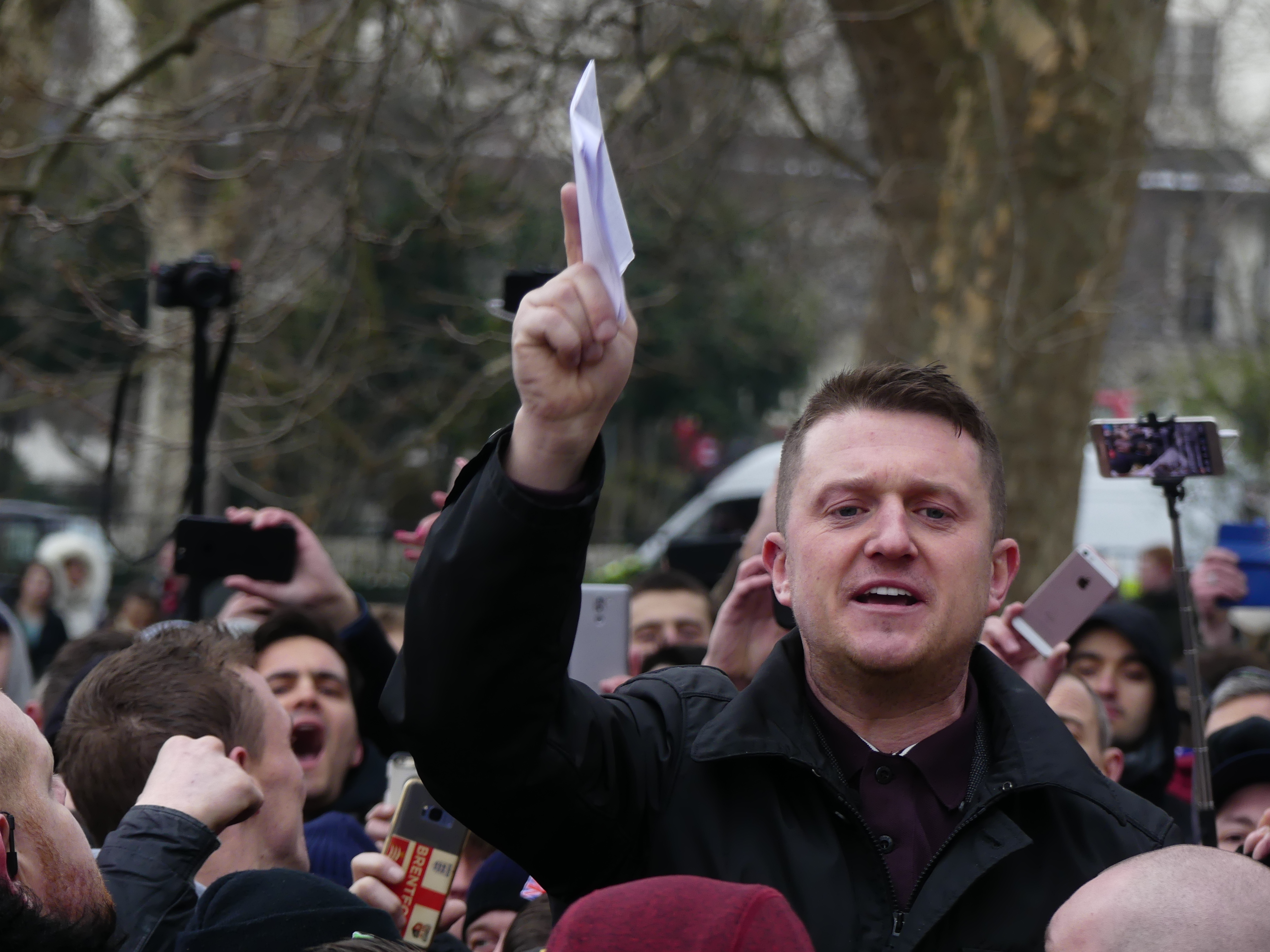
Tommy Robinson’s trial at Southwark Crown Court has exposed a difficult question at the intersection of press freedom, personal privacy and the rule of law: what happens when a controversial public figure believes journalists have endangered his family, then responds by tracking down those journalists and putting pressure on them?
Robinson, whose real name is Stephen Yaxley-Lennon, denies two charges of harassment causing fear of violence against Daily Mail journalists Andrew Young and Jacob Dirnhuber. Prosecutors allege that his social media posts, messages and telephone calls in August 2024 crossed the line from challenging a newspaper’s reporting into intimidation.
Robinson says he was panicked after the MailOnline published a report about his family holiday in Cyprus, including information he believed exposed his family to danger. He maintains that he wanted to confront the journalists about their reporting, not encourage violence against them.
Both issues deserve serious scrutiny. Journalists should be able to investigate controversial public figures without facing threats or intimidation. Equally, the press should not assume that publishing someone’s location during a period of public unrest raises no questions about privacy or the safety of family members.
The jury must decide whether the prosecution has proved the charges. Political loyalties, public dislike of Robinson and criticism of the Daily Mail must not substitute for examining the evidence.
Watch: Tommy Robinson’s trial and the row over press conduct
The following video relates to the case and the wider dispute surrounding Robinson’s allegations against the newspaper.
Why the case began: a newspaper report from Cyprus
The allegations date back to August 2024, when England was experiencing unrest following the murders of three girls in Southport.
Robinson was in Cyprus on a family holiday while posting about events in Britain. The Daily Mail published a report headlined “Stoking Race Riots from his Sunbed”, examining his online activity and alleged role in influencing the unrest.
Robinson objected to the article and, in particular, to the publication of information that he said allowed people to identify where his family was staying. He told the court that the hotel’s name began circulating online and that people were encouraging others to go there.
He said he became frightened for his children and former wife. His evidence included claims that the family had to change their arrangements after the location became known.
Those concerns should not simply be waved away because Robinson is a deeply divisive political activist. If reporting exposes a family’s location during a volatile period, it is reasonable to ask whether the public interest justified that decision and whether the potential risks were properly considered.
That does not mean the newspaper necessarily acted unlawfully or that Robinson’s subsequent actions were justified. Those are separate questions.
The Mail’s reporting concerned a public figure commenting on serious national unrest, making the subject a legitimate matter of public interest. But public interest is not a universal answer to every question about how a story is reported. The methods used, the information published and the foreseeable consequences also matter.
The central dispute is therefore not simply whether the newspaper had a right to report on Robinson. It is how the reporting was conducted, what risks arose and whether Robinson responded in a way that crossed the legal boundary into harassment.
What prosecutors allege Robinson did
Prosecutor Ben Holt told the jury that Robinson responded to the article with a campaign of intimidation against Young and Dirnhuber.
The allegations concern activity on X and other communications between 5 and 7 August 2024. The court heard that Robinson allegedly told Young, during a telephone call, “I’m coming to get you”, and sent Dirnhuber a message saying, “I’ll be knocking at your door”.
Prosecutors also highlighted a video in which Robinson referred to finding journalists and applying what he called “men’s rules”. Holt argued that these statements, together with the steps taken to locate the journalists, amounted to retaliation designed to make them fear violence.
Robinson admitted in court that he hired private investigators to find the journalists and obtain photographs of their homes. He said he wanted to identify those responsible for the article and put pressure on them to answer his complaints.
He denied intending to intimidate them or expose their families to violence.
That distinction is central to the case. A person can be angry about a news report, challenge its accuracy and demand an explanation. Hiring investigators to locate journalists, photographing their homes and telling them that you are coming to find them is a different matter, particularly when the person involved has a large online following.
The prosecution argues that Robinson’s actions must be judged in their full context, including how the journalists interpreted his statements and what followed online. The defence says his actions were driven by fear and anger rather than an intention to cause fear of violence.
The jury must assess those competing accounts against the evidence and the legal requirements of the charges.
The journalists say they feared for their families
Young and Dirnhuber described their concerns in statements presented to the court.
Young said he feared Robinson’s followers might seek revenge against him or his family. The court heard that he and his family were concerned about activity around their home and that security measures were taken.
Dirnhuber said he feared returning home and described concerns about the possibility of being intercepted or attacked. The prosecution argued that the conduct alleged against Robinson had forced journalists and family members to take steps to protect themselves.
These are serious claims. Journalists should not have to fear violence because they publish reporting that a subject dislikes, and their families should not become collateral damage in disputes over news coverage.
Robinson’s argument that he wanted to question the journalists on camera does not, by itself, resolve the issue. The question is whether the methods he used went beyond legitimate criticism or confrontation and amounted to the offences alleged.
The prosecution also argued that Robinson knew his statements could prompt reactions from his followers. That issue is particularly relevant when a public figure has a large audience and directs attention towards identifiable individuals.
A public figure cannot automatically be held responsible for every action taken by a supporter. Equally, the potential consequences of directing an online audience towards specific people cannot simply be ignored. The jury must consider what Robinson did, what he said and the circumstances in which he acted.
Robinson says the newspaper put his family at risk
Giving evidence on 22 October, Robinson described himself as “panicked and terrified” after the MailOnline article appeared.
He told the jury that he believed the reporting had endangered his family by identifying where they were staying. He said the newspaper could have reported on his online statements without publishing information that could help people locate them.
Robinson became tearful while discussing the effect the episode had on his children. He said he wanted to find the journalists and question them about the article, not physically harm them or their families.
He also said he had not properly considered how his own actions might affect the journalists.
That admission matters. It does not establish that the charges are proved, but it raises a difficult question for the defence: can someone claim to have been protecting their family while failing to consider the consequences of directing pressure towards other people’s homes and relatives?
Robinson’s supporters may argue that the newspaper should be held accountable for publishing information he considered dangerous, and that his concerns were dismissed because of his political reputation. Those concerns can be debated without assuming that every action he took was reasonable.
His critics, meanwhile, must not treat the fact that he is accused of harassment as proof of guilt before the jury has reached its decision.
A fair assessment requires both propositions to remain in view: his concerns about his family deserve to be examined, and the journalists’ concerns about alleged intimidation deserve the same serious consideration.
The press should be accountable, too
The case also raises a broader question about the responsibilities of news organisations.
A free press is essential to democracy. Journalists must be able to investigate political movements, challenge public figures and report on events of national importance without fear of retaliation. Public figures cannot demand immunity from scrutiny simply because they dislike a headline.
But press freedom does not mean that every editorial decision is beyond criticism. Newspapers should be prepared to explain why particular details were published, what public interest they served and whether a less intrusive approach could have achieved the same purpose.
In this case, Robinson argued that the newspaper could have examined his public statements without disclosing the location of his family holiday. Whether the Mail’s reporting was justified is a question distinct from whether Robinson subsequently committed harassment.
If a newspaper’s reporting is unfair or places people at unnecessary risk, there are legitimate ways to challenge it: request a correction, submit a complaint to the publication, use the relevant press complaints process or pursue legal advice where appropriate.
Robinson argued in court that a formal complaint would have taken too long. That frustration may help explain his reaction, but it does not settle whether the actions he chose were lawful.
The same standard should apply to both sides. The press must not use its freedom as an excuse for irresponsible reporting, and those who object to journalism must not use anger or public influence to intimidate reporters.
Private investigators, photographs and “men’s rules”
One of the most significant elements of the case is Robinson’s admission that he hired private investigators to locate the journalists and photograph their homes.
He said he wanted to put pressure on them and confront them about the article. The prosecution argued that this conduct, combined with his statements and online posts, was intimidating.
Holt told jurors not to accept a system in which personal retaliation replaces the law. He argued that Robinson had chosen to threaten the journalists rather than pursue a complaint through established channels.
The phrase “men’s rules”, used by Robinson in a video discussed during the trial, became a particular focus of the prosecution’s closing argument. Holt characterised the approach as vigilante-style retaliation.
Robinson’s defence argued that his conduct should be considered in the context of his genuine fear for his family and his belief that the newspaper had put them at risk.
There is an important difference between investigating a complaint and using personal information to exert pressure on the people involved. Photographs of homes and references to turning up at someone’s door can carry a very different meaning from a request for an interview or a formal demand for a correction.
However, the legal question is not answered by a slogan or by a prosecutor’s characterisation. The jury must decide whether the evidence establishes the charges.
The threat against Robinson is also part of the context
The trial also heard about previous police threat-to-life warning notices issued to Robinson. Four notices from 2018, 2019 and 2024 were included among agreed facts, with one issued shortly after the Mail article appeared.
The court also heard about an online video posted by a man identified as Omar Abdirizak, in which he addressed Robinson and made a rifle gesture.
These details are relevant context for understanding why Robinson says he was frightened. They do not automatically prove that every concern he raised was justified, nor do they excuse alleged conduct towards the journalists.
A threat against one person does not give that person an unrestricted right to threaten someone else. At the same time, a fair account should not omit evidence of threats against Robinson while discussing his own alleged intimidation of others.
Threats should be taken seriously regardless of the political views of the person targeted. Public figures with controversial opinions remain entitled to protection from violence, just as journalists and their families do.
The correct response to threats is investigation and lawful protection, not an assumption that one person’s experience of danger makes another person’s fear irrelevant.
The Southport unrest and the political backdrop
The dispute emerged during a particularly volatile period in Britain.
Three girls were murdered in Southport in July 2024. The killings were followed by disorder in several parts of England, amid the spread of false online claims about the suspect. Robinson was posting about events from Cyprus, and the Daily Mail’s article examined his alleged influence on the unrest.
Robinson disputed the suggestion that he had stoked the riots and told the jury he had also called for calm. He described the newspaper’s coverage as unfair and objected to the way it portrayed his role.
The wider context matters because public figures, journalists and social media audiences were operating amid intense anger, speculation and misinformation. But the seriousness of that period does not remove the need to establish what happened in this specific case.
A person’s political views should not determine whether evidence is accepted or dismissed. Nor should public concern about immigration, integration or national identity be treated as proof that a particular individual is guilty of an offence.
The same applies in the other direction: a public figure’s claim to be defending ordinary people or challenging the establishment does not place their conduct beyond scrutiny.
The trial is about two specific charges arising from alleged actions in August 2024. It should be decided on the evidence relevant to those charges, not on whether jurors approve or disapprove of Robinson’s politics.
What the prosecution and defence argued in closing
In his closing speech on 23 October, Holt urged the jury not to accept a “vigilante world” in which personal retaliation replaces the rule of law. He argued that Robinson’s words and actions showed a deliberate effort to pressure the journalists and that their fears were reasonable in the circumstances.
The prosecution highlighted the alleged threats, the use of private investigators, photographs of homes and family members, and the online reaction that followed Robinson’s posts.
The defence, led by Alisdair Williamson KC, argued that Robinson’s fear for his family was genuine. Williamson told the jury that the defendant had reacted to what he believed was a dangerous intrusion into his family’s privacy and said his actions should be assessed in that context.
Robinson denied wanting to expose the journalists or their families to violence. However, he accepted that he wanted to put pressure on them and acknowledged that he had not fully considered how his conduct might affect them.
The jury must decide whether the prosecution has proved both charges. The fact that Robinson says he was frightened does not automatically answer the allegations against him. Equally, the prosecution’s forceful description of his behaviour does not replace the jury’s duty to evaluate the evidence impartially.
What happens next in the Tommy Robinson trial?
As of the latest reporting on Friday, 23 October 2026, the jury had heard the closing arguments and the trial was continuing. No verdict was reported in the material available at that point.
Robinson denies both charges and remains entitled to the presumption of innocence unless and until guilt is established in court.
The outcome will depend on the jury’s assessment of the evidence, including the alleged threats, the messages and posts, the photographs of the journalists’ homes, the concerns about Robinson’s family’s safety and the competing explanations offered by the prosecution and defence.
The case has implications beyond one controversial activist. It raises questions about the boundaries of press freedom, the responsibilities of influential online figures, the protection of families and the proper way to challenge reporting believed to be unfair.
News Puddle’s position is straightforward: journalists must be free to investigate public figures, but press freedom should not shield irresponsible decisions from criticism. People who believe their privacy or safety has been compromised deserve a fair hearing, but grievances must be pursued through lawful means. Threats and intimidation should be investigated consistently, regardless of who makes them or who becomes their target.
The jury’s job is narrower than the wider political debate. It must decide whether the prosecution has proved the charges against Robinson. That decision should be guided by evidence and law, not by political allegiance.
Frequently asked questions
What is Tommy Robinson accused of?
Robinson faces two charges of harassment causing fear of violence against Daily Mail journalists Andrew Young and Jacob Dirnhuber. The allegations relate to social media posts, messages and telephone calls made between 5 and 7 August 2024. He denies both charges.
Why did Robinson say he was angry with the Daily Mail?
He argued that a report about his holiday in Cyprus revealed information that could identify where his family was staying during a period of unrest in England. He said this caused him to fear for his family’s safety and that the newspaper could have reported on his public statements without disclosing the location.
Did Robinson hire private investigators to find the journalists?
Yes. Robinson told Southwark Crown Court that he hired private investigators to locate the journalists and obtain photographs of their homes. He said he wanted to put pressure on them and challenge their reporting, while denying that he intended to cause fear of violence.
What do the journalists say happened?
Young and Dirnhuber told the court they feared violence after Robinson’s alleged statements and online activity. The prosecution said they took steps to protect themselves and their families, and argued that the conduct amounted to harassment causing fear of violence.
Does the case mean the Daily Mail was right to publish the holiday location?
Not necessarily. The legality of Robinson’s alleged conduct and the editorial judgement behind the newspaper’s reporting are separate questions. The newspaper’s public-interest justification can be scrutinised without assuming that Robinson’s response was lawful.
What did the prosecutor mean by a “vigilante world”?
Prosecutor Ben Holt used the phrase in his closing speech to argue that people should not use personal retaliation instead of lawful ways to resolve disputes. The defence argued that Robinson’s actions should be considered in the context of his fear for his family.
Has Tommy Robinson been found guilty?
No verdict was reported in the latest court coverage available for Friday, 23 October 2026. Robinson denies the charges, and the jury must decide whether the prosecution has proved them.
Why is the case attracting wider political attention?
The case involves a polarising political figure, a major newspaper and questions about family privacy, online influence, press accountability and alleged intimidation. It has also renewed debate about how public figures and journalists should handle disputes during periods of national tension.